
Assessing Google’s 2029 Post-Quantum Cryptography Migration Timeline
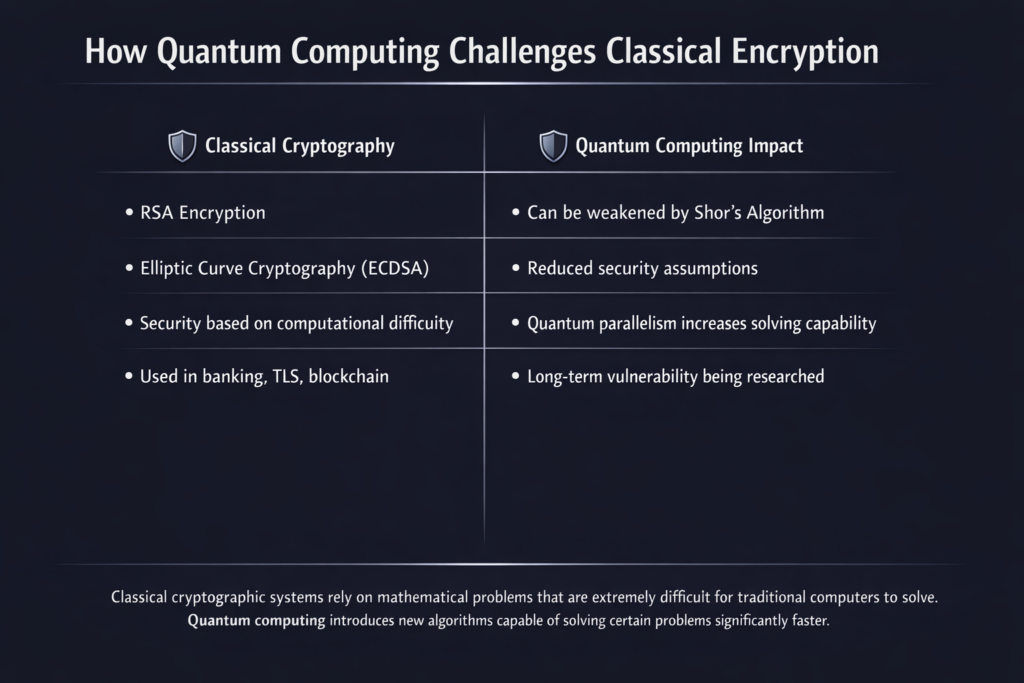
For decades, modern digital security has depended on cryptographic systems built on a simple assumption that certain mathematical problems are too difficult for classical computers to solve efficiently. RSA, elliptic curve cryptography and the protocols that protect internet banking, cloud platforms, messaging systems and digital asset infrastructure all rely on that assumption holding true. Quantum computing is beginning to challenge it.
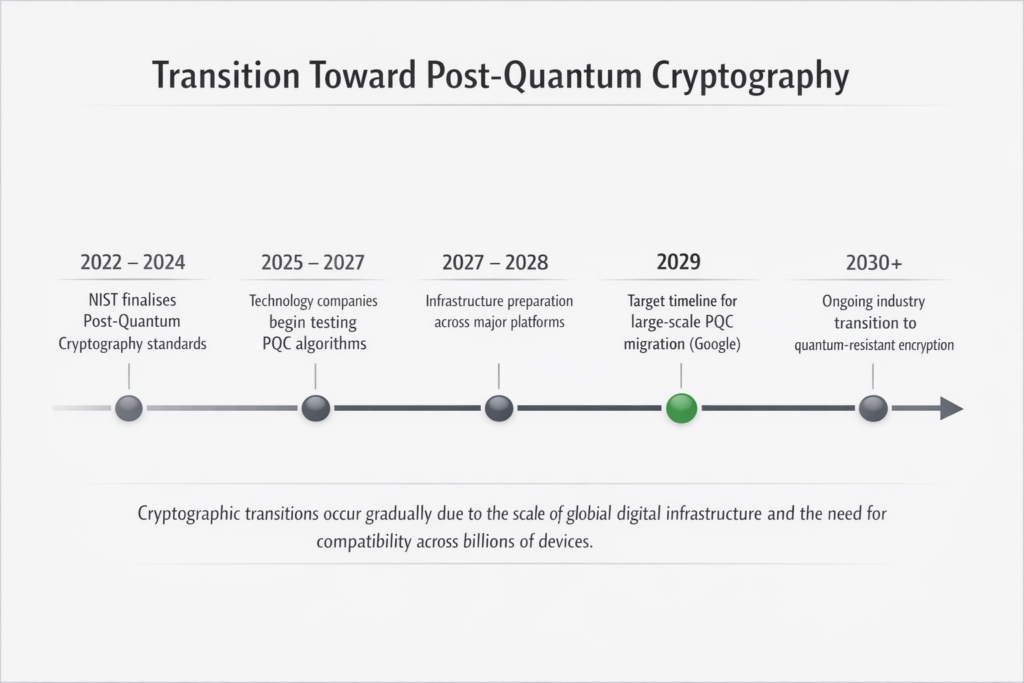
In March 2026, Google said it is setting a 2029 timeline for post-quantum cryptography migration, framing the move as preparation for the quantum era rather than a response to an immediate crisis. Google said the updated timeline reflects progress in quantum hardware development, quantum error correction and quantum factoring resource estimates, and it specifically highlighted authentication services and digital signatures as priority areas for migration.
Understanding the quantum challenge:
Traditional public-key cryptography is built around mathematical problems that are computationally hard for classical machines, including factoring large integers and solving discrete logarithm problems. These are the foundations of widely used security systems such as RSA, TLS and elliptic curve digital signatures.
Quantum computers introduce a different computational model. In theory, sufficiently powerful quantum systems could break many of today’s widely used cryptographic methods, particularly encryption and digital signatures. Google has warned that the threat is already relevant today because of “store now, decrypt later” attacks, where encrypted data is collected now and potentially decrypted in the future once quantum capability matures.
What Post-Quantum Cryptography Means:
Post-quantum cryptography, or PQC, refers to cryptographic algorithms designed to remain secure even against quantum attacks. Instead of relying on factorisation or elliptic curve mathematics, PQC uses other hard problems such as lattice-based, hash-based, and code-based constructions.
This is not theoretical research with no deployment path. NIST says three post-quantum standards are now ready to implement, and it is urging organisations to begin migration work now. NIST also notes that these standards were developed through a rigorous international process and are intended to protect both general encryption and digital signatures.
Why Google’s 2029 timeline matters:
Google’s timeline matters because of scale. The company supports systems used by billions of users across browsers, cloud services, mobile platforms, and identity systems. When an organisation that large sets a migration target, it helps define expectations for the wider technology sector. Google’s message is not that encryption will definitely fail in 2029, but that the transition needs to be underway well before a cryptographically relevant quantum computer becomes practical.
That distinction is important. The timeline is about readiness, not panic. It reflects the reality that cryptographic migrations are slow, complex and highly interdependent. Large systems must preserve compatibility across devices, services and protocols while avoiding the introduction of new vulnerabilities. NIST describes this as a multi-year migration challenge and encourages organisations to identify where vulnerable algorithms are still in use and replace or update them.
Implications for digital asset infrastructure:
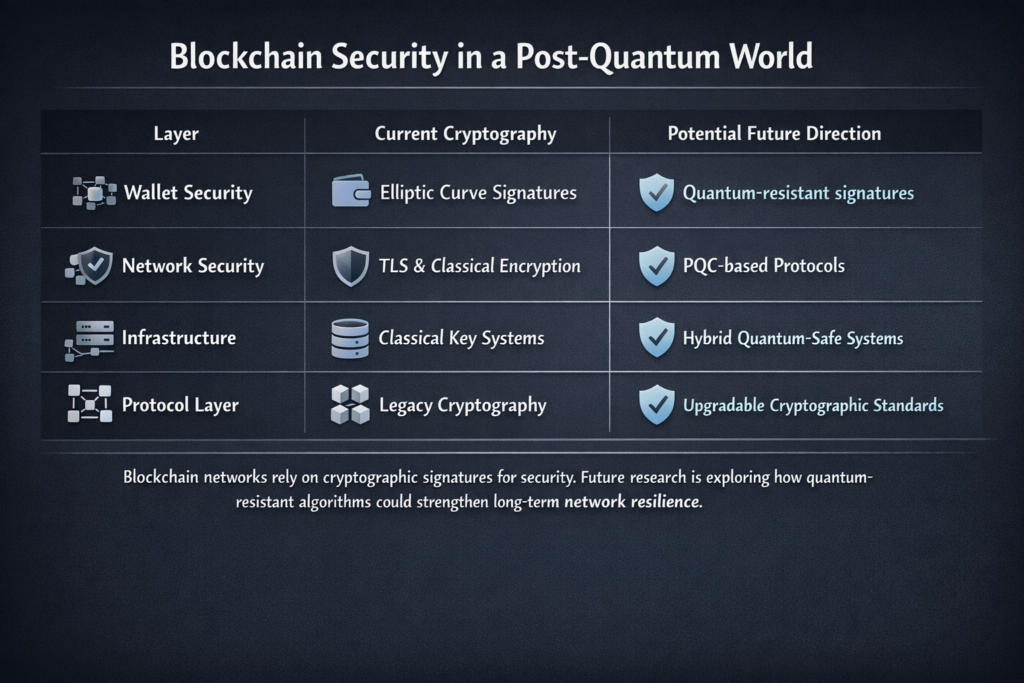
The significance of this shift extends well beyond traditional web security. Blockchain networks, wallets, exchanges, custodians, and payment systems all depend on cryptographic signatures to verify ownership and authorise transactions. If quantum computing eventually reaches the level required to threaten current signature schemes, the implications would extend into digital assets, financial infrastructure, and identity systems alike.
That is why the broader move toward PQC matters to the crypto sector. It reinforces the need to think in long time horizons, especially for systems that protect value, identity, and settlement integrity. While large-scale quantum computers capable of breaking today’s widely used cryptography do not yet exist, the industry is now being asked to prepare for that possibility in advance.
The long timeline of cryptographic evolution:
One of the most important takeaways from Google’s 2029 plan is that security infrastructure changes slowly for good reason. Cryptographic systems are deeply embedded in operating systems, browsers, authentication frameworks, cloud environments and enterprise networks. Updating them requires testing, standardisation, and broad adoption across the ecosystem.
That is also why organisations are being encouraged to begin now. NIST states directly that now is the time to migrate to new post-quantum encryption standards and that organisations should start applying the standards available today.
Why Preparation Matters:
The transition to PQC is not being driven by a current collapse in digital security. It is being driven by long-term resilience. In practice, some data must remain confidential for many years and that means security planning must look well beyond the current hardware landscape. Google’s approach reflects this reality migrate early, reduce exposure and avoid waiting until the threat becomes urgent.
For governments, financial institutions, technology providers and digital asset businesses the message is consistent. The quantum era may still be developing, but the work of preparing for it has already begun.
Last Thoughts:
Google’s 2029 post-quantum cryptography timeline is less a prediction of immediate failure and more a signal that the security landscape is changing. The company is treating quantum readiness as an operational priority, especially around authentication and digital signatures, while NIST’s standards show that migration is no longer just a research discussion it is now a practical roadmap.
For participants in the digital asset ecosystem, this is a trend worth watching closely. Blockchain systems, financial platforms, and identity infrastructure all depend on strong cryptography and the shift to quantum-resistant standards will likely shape how these systems evolve over the coming years. Understanding that transition helps investors, businesses, and market participants better appreciate the security foundations of the digital economy.
About HODL OTC:
HODL OTC (Pty) Ltd (FSP 53723) is a South African cryptocurrency-based wealth services provider and an Authorised Financial Services Provider regulated by the Financial Sector Conduct Authority (FSCA). We specialise in over-the-counter (OTC) cryptocurrency trading, offering a secure, compliant and professional environment for digital asset transactions. Our services are designed to support wealth-oriented clients with efficient execution, deep liquidity and a strong focus on regulatory alignment within the evolving digital asset landscape.
Risk Warning:
Crypto assets are high-risk and can be volatile. Investors should be aware that values may fluctuate, and past performance is not indicative of future results. This content is for general information only and does not constitute financial, investment, tax, or legal advice. Clients should assess whether crypto assets are suitable for their financial circumstances and objectives.
Stay Connected with HODL OTC:
Access market insights, track your digital asset activity, and stay informed on the go. Download the HODL OTC app today:
Sources:
- https://blog.google/innovation-and-ai/technology/safety-security/cryptography-migration-timeline/
- https://www.nist.gov/pqc
- https://www.nist.gov/news-events/news/2024/08/nist-releases-first-3-finalized-post-4. quantum-encryption-standards
- https://www.theguardian.com/technology/2026/mar/26/google-quantum-computers-crack-encryption-2029
Visit us on www.hodlotc.com
Call or WhatsApp us on 066 560 1607
Join our Social Media Pages:
