
Assessing the April 2026 Crypto and Macro Economic Calendar
Financial markets rarely move in isolation. Digital assets, equities, bonds and commodities increasingly respond to the same macroeconomic signals including inflation data, labour market conditions, central bank policy decisions and global liquidity trends.
For participants in the digital asset ecosystem, this connection has become particularly clear over the past two years. Bitcoin and other major crypto assets now react not only to developments within blockchain networks, but also to broader macroeconomic indicators such as Federal Reserve policy, global interest rate expectations and institutional capital flows.
April 2026 presents several events that may influence risk appetite across global markets. Economic data releases, central bank meetings, corporate earnings announcements and major blockchain developments are all expected to shape investor sentiment over the coming weeks.
Understanding how these events interact with digital asset markets can help investors place price movements into a broader economic context.
The Growing Link Between Crypto and Macro Markets
Historically, cryptocurrency markets were often viewed as operating independently from traditional financial systems. That perception has changed significantly.Institutional participation, the growth of spot Bitcoin ETFs and the integration of digital assets into broader investment portfolios have strengthened the connection between crypto markets and traditional macroeconomic cycles.
Periods of tightening financial conditions such as rising interest rates or shrinking liquidity often place pressure on risk assets including technology equities and cryptocurrencies. Conversely, expectations of monetary easing or increased liquidity tend to support higher valuations across growth-oriented sectors.
This means economic indicators such as inflation data, unemployment figures and central bank policy announcements now play an increasingly important role in shaping digital asset market sentiment.
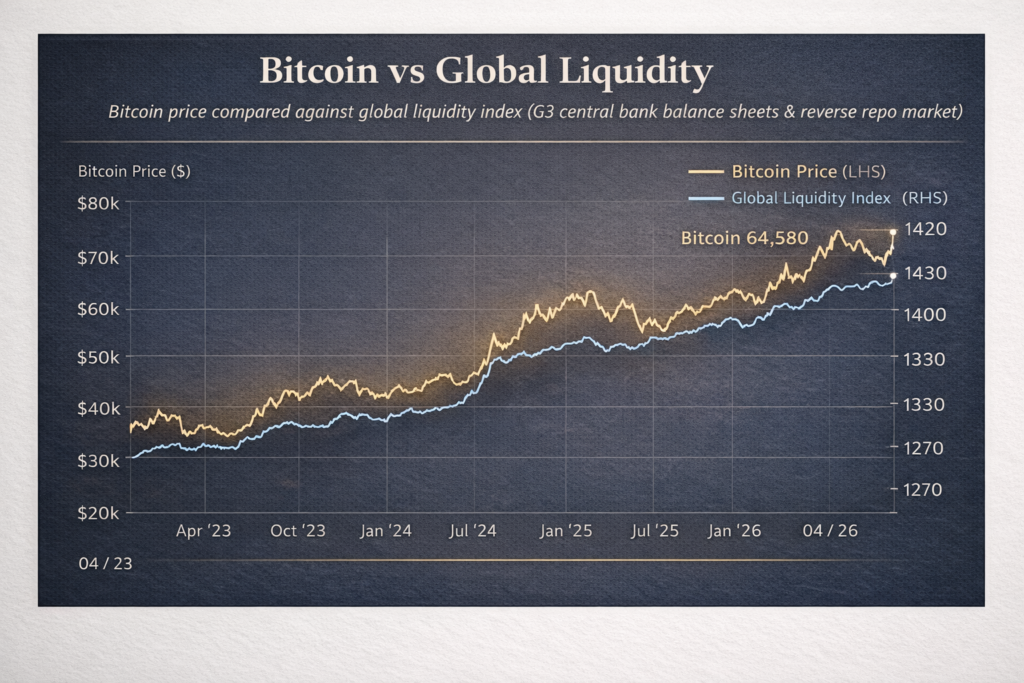
Historical relationships between liquidity and asset prices may change and do not guarantee future performance.
Key Macro Themes for April:
Several macroeconomic narratives are expected to dominate financial markets this month.
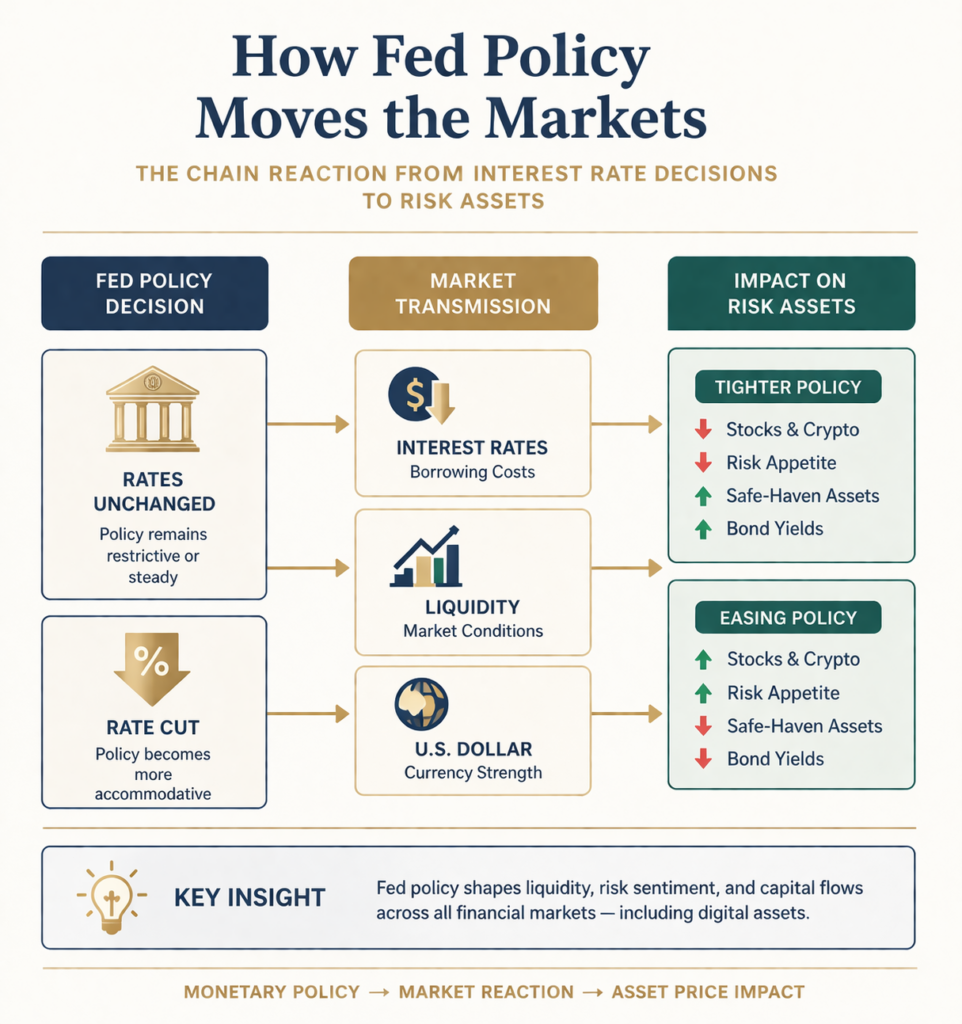
One of the most important remains the path of US monetary policy. The Federal Reserve has maintained a cautious stance in recent months, balancing concerns about persistent inflation with signs that the labour market may be gradually cooling.
Investors will also be watching global central banks closely. Policy shifts in major economies such as Japan can influence currency markets, bond yields and global capital flows, all of which indirectly affect digital asset liquidity conditions.
At the same time the start of the first-quarter corporate earnings season will provide insight into economic momentum, corporate profitability and consumer demand.
For investors with exposure to both traditional and digital assets these developments can offer important signals about the broader market environment.
April 2026 Crypto & Macro Economic Calendar
Below are several key dates that may influence global markets and digital asset sentiment.
April 3 — United States Unemployment Rate
The US labour market remains a central factor in Federal Reserve policy decisions.
If unemployment rises meaningfully, it could increase expectations that the Fed may consider easing monetary policy later in the year.
For risk assets including cryptocurrencies, signs of labour market cooling may be interpreted as supportive if they increase the probability of lower interest rates.
April 5 — OPEC+ Oil Market Meeting
Energy markets play an important role in global inflation dynamics. Decisions taken by the OPEC+ alliance regarding oil production levels can influence energy prices, which in turn affect transportation costs, manufacturing expenses and consumer inflation.
Higher oil prices can contribute to inflationary pressure across global economies, potentially complicating the policy outlook for central banks, because inflation expectations influence interest rate policy and liquidity conditions, developments in global energy markets may indirectly shape investor sentiment across equities, commodities and digital assets.
April 8 — Federal Reserve FOMC Minutes
The minutes from the Federal Reserve’s previous policy meeting often provide deeper insight into how policymakers are interpreting inflation data, economic growth and financial stability risks.
Markets will analyse the language used by policymakers for clues regarding the future path of interest rates and liquidity conditions.
Subtle shifts in tone from hawkish to more neutral or dovish language can sometimes move markets significantly.
April 9 — China Consumer Price Index (Inflation)
Inflation data from China provides insight into economic conditions within the world’s second-largest economy.
Changes in Chinese inflation can reflect shifts in domestic demand, industrial production and global supply chain dynamics.
China remains a major contributor to global trade and commodity consumption, inflation trends in the country can influence global manufacturing costs and international market sentiment.
For investors, developments in large economic regions such as China can contribute to broader shifts in risk appetite across global markets, including digital assets.
April 10 — United States Consumer Price Index (Inflation)
Inflation data remains one of the most influential economic releases for global markets.
If inflation proves more persistent than expected, the Federal Reserve may be forced to maintain tighter monetary policy for longer. Higher interest rates typically reduce liquidity across financial markets and can weigh on risk-sensitive assets.
Conversely, evidence that inflation is moderating could strengthen expectations for eventual rate cuts, potentially supporting equities and digital assets alike.
April 14 — Start of Major Corporate Earnings Season
The beginning of the quarterly corporate earnings season provides insight into the financial performance of major publicly listed companies.
Corporate earnings reports offer valuable information about business investment, consumer demand and economic momentum. Strong earnings results can reinforce confidence in economic growth, while weaker-than-expected results may signal slowing activity.
Although earnings announcements relate primarily to equity markets, shifts in investor confidence can influence broader financial market sentiment and capital allocation decisions, including investment flows into digital assets.
April 21 — South African Reserve Bank Monetary Policy Review
The South African Reserve Bank’s monetary policy review provides insight into the country’s economic outlook, inflation expectations and interest rate policy considerations.
While South Africa represents a smaller share of global economic activity compared with major economies, monetary policy decisions in emerging markets can still influence regional currency stability, capital flows and investor sentiment.
For digital asset markets, macroeconomic developments across emerging markets can contribute to broader global liquidity dynamics and adoption trends.
April — Solana Network Upgrade
Beyond macroeconomic developments, technological progress within blockchain networks also remains an important factor for digital asset markets.
The upcoming Solana network upgrade aims to improve transaction efficiency and reduce operational costs across the network.
If successful the upgrade could enhance the network’s scalability and improve the economic efficiency of decentralised applications operating on the platform.
Technological developments such as these often influence long-term ecosystem growth even if their immediate market impact is less predictable.
April 28 — Bank of Japan Interest Rate Decision
The Bank of Japan remains one of the most closely watched central banks due to its historically accommodative monetary policy.
Any shift in Japanese interest rate policy could have global implications for bond markets and currency flows.
One particular area of interest is the potential impact on the yen carry trade, where investors borrow in low-yield currencies to invest in higher-return assets.
Changes in these dynamics can affect liquidity across global markets including digital assets.
April 29 — Federal Reserve Interest Rate Decision
The Federal Reserve’s policy decision at the end of April will likely be one of the most significant events of the month.
Even if interest rates remain unchanged, the accompanying policy statement and press conference may provide signals about the central bank’s outlook on inflation, economic growth and financial stability.
Markets will look for any indication of when the Fed may begin easing monetary policy or whether current conditions require a continued cautious stance.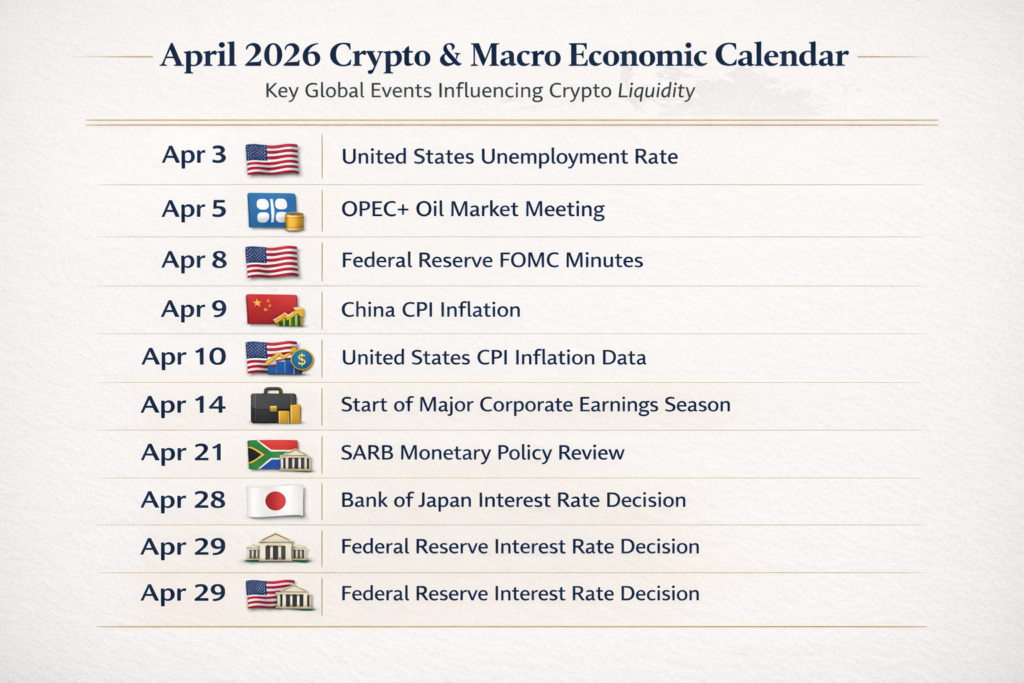
Why Economic Calendars Matter for Digital Asset Investors
For long-term investors, economic calendars are less about predicting short-term price movements and more about understanding the forces that shape market conditions.
Digital asset markets operate within a broader financial ecosystem that includes global liquidity cycles, institutional investment flows and macroeconomic policy decisions.
Monitoring economic events helps investors interpret volatility more effectively and place individual price movements within the wider economic landscape.
This perspective is particularly relevant for wealth-oriented investors who view digital assets as one component within a diversified portfolio rather than a standalone speculative trade
Last Thoughts
April 2026 highlights how closely digital asset markets have become intertwined with global economic conditions.
Inflation data, labour market indicators, central bank decisions and corporate earnings all have the potential to influence investor sentiment and liquidity conditions across financial markets.
At the same time, technological developments within blockchain networks continue to shape the long-term evolution of the digital asset ecosystem.
For investors and market participants, maintaining awareness of both macroeconomic signals and industry developments can provide valuable context when navigating periods of market volatility.
Economic calendars are therefore less about predicting exact price movements and more about understanding the broader environment in which financial markets operate.
About HODL OTC:
HODL OTC (Pty) Ltd (FSP 53723) is a South African cryptocurrency-based wealth services provider and an Authorised Financial Services Provider regulated by the Financial Sector Conduct Authority (FSCA). We specialise in over-the-counter (OTC) cryptocurrency trading, offering a secure, compliant and professional environment for digital asset transactions. Our services are designed to support wealth-oriented clients with efficient execution, deep liquidity and a strong focus on regulatory alignment within the evolving digital asset landscape.
Risk Warning:
Crypto assets are high-risk and can be volatile. Investors should be aware that values may fluctuate, and past performance is not indicative of future results. This content is for general information only and does not constitute financial, investment, tax, or legal advice. Clients should assess whether crypto assets are suitable for their financial circumstances and objectives.
Stay Connected with HODL OTC:
Access market insights, track your digital asset activity, and stay informed on the go. Download the HODL OTC app today:
Sources:
https://www.federalreserve.gov/monetarypolicy/fomccalendars.htm
https://www.federalreserve.gov/newsevents/2026-04.htm
https://www.bls.gov/schedule/2026/
https://www.opec.org/opec_web/en/press_room/
https://www.sarb.co.za/monetary-policy/monetary-policy-committee/
https://www.boj.or.jp/en/mopo/mpmsche_minu/index.htm
https://www.mtsinsights.com/events/4040/
https://www.ainvest.com/news/solana-simd-0266-upgrade-flow-analysis-efficiency-gains-2603/
https://coinfomania.com/solana-approves-simd-0266-upgrade-for-faster-transactions/
https://solana.com/news/solana-network-upgrades
https://u.today/rebirth-of-solana-defi-this-anza-upgrade-makes-solana-98-more-effective
Visit us on www.hodlotc.com
Call or WhatsApp us on 066 560 1607
Join our Social Media Pages:
